

Posts by

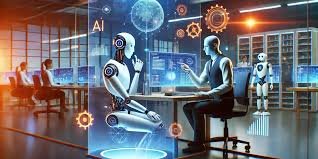
Artificial Intelligence (AI) is no longer just a futuristic concept—it’s here, reshaping industries and transforming the way we live and work. While its potential excites many, it also raises important questions: What will AI mean for jobs? Will it create more opportunities or take them away? The truth is, AI will impact careers in complex ways, bringing both disruption and new possibilities.
1. Automation of Routine Tasks
AI excels at repetitive, predictable tasks. From data entry to basic accounting, many administrative roles will increasingly be handled by intelligent systems. This doesn’t necessarily mean fewer jobs—it means human workers will be freed from mundane work to focus on higher-value, creative, or interpersonal tasks.
2. Emergence of New Roles
As AI advances, new careers will emerge. Fields like AI ethics, machine learning engineering, data science, and prompt engineering didn’t exist a decade ago. Similarly, industries will need specialists who can bridge the gap between humans and machines—people who understand not only the technology but also how to apply it to real-world problems.
3. Transformation of Existing Jobs
Rather than eliminating roles, AI will augment them. Doctors, for example, may rely on AI tools for faster diagnoses, while marketers may use AI for audience insights and campaign optimization. Careers across law, finance, education, and logistics will evolve to include AI-driven workflows, requiring workers to adapt and learn new skills.
4. Growing Importance of Soft Skills
Ironically, as machines get smarter, human skills like empathy, communication, and leadership will become even more valuable. AI can analyze data, but it can’t replace human judgment, emotional intelligence, or creativity. Workers who can combine technical literacy with strong interpersonal skills will thrive.
5. Lifelong Learning Becomes Essential
The pace of AI innovation means careers will no longer be static. Upskilling and reskilling will be essential to stay relevant in the workforce. Companies and employees alike will need to embrace continuous learning as a core part of career development.
Conclusion
AI will not simply replace jobs—it will reshape them. The careers of the future will be defined by adaptability, collaboration with intelligent machines, and the ability to leverage technology to solve meaningful problems. For those willing to learn and evolve, AI represents not a threat but a powerful opportunity to redefine work itself.